
Hungry For Flamingos
This piece first appeared in the Fredericksburg Standard in April 2022.
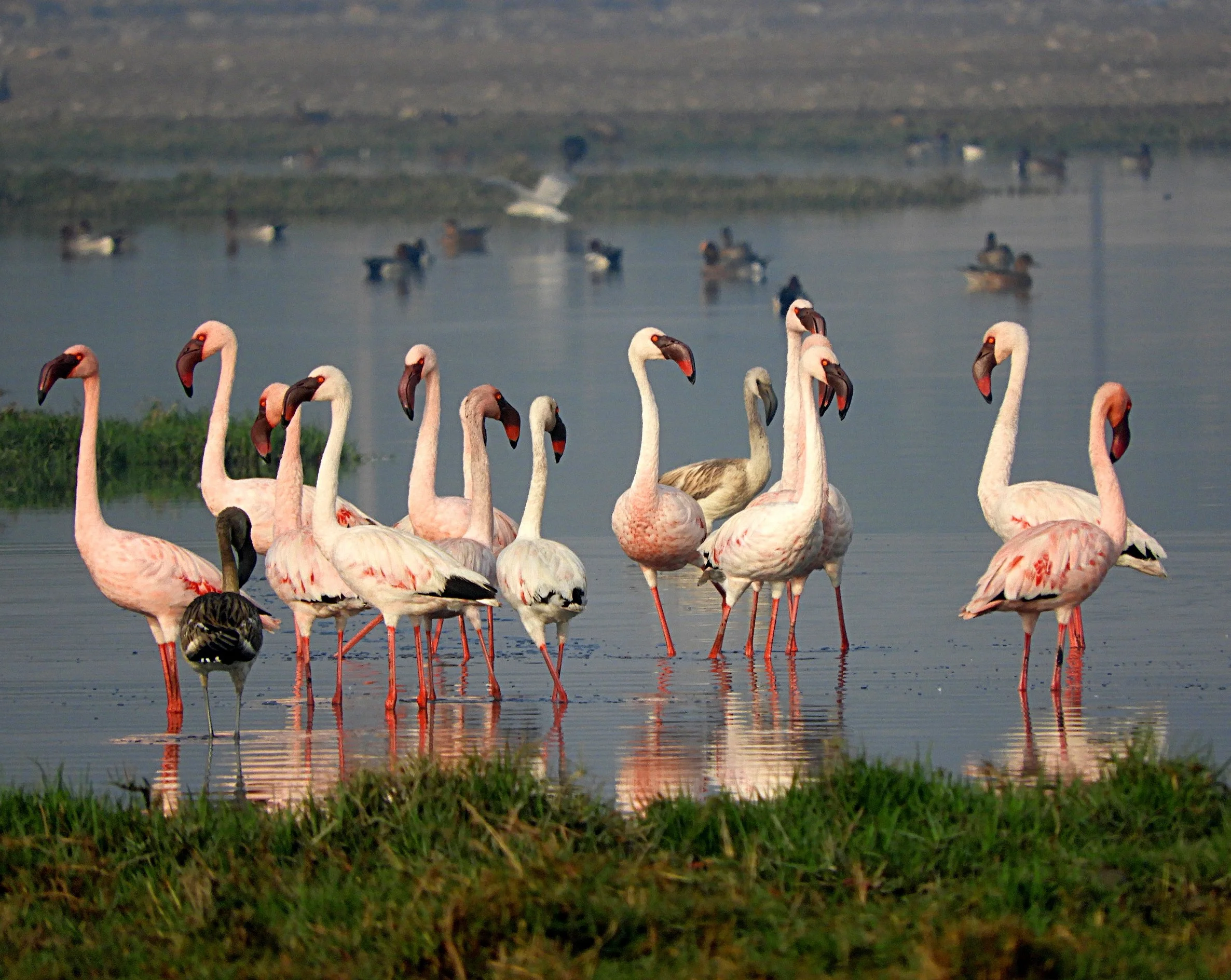
There’s a flamingo on the Texas Coast and I for one am getting hungry! I’ll explain the incredibly odd by today’s standards culinary history of the flamingo here in a bit but first allow me to detail how this wayward bird came to find its way to the Lone Star State. The African flamingo correctly known as “No. 492” is one of two flamingos that escaped from a Kansas zoo during a storm 17 years ago. He was spotted near Port Lavaca, Texas, at Rhodes Point in Cox Bay on March 10. Video of the five-foot-tall bird went viral, and the Coastal Fisheries Division of Texas Parks and Wildlife confirmed to The Associated Press last week that the footage is real and that the bird is in fact No. 492 aka “Pink Floyd” the stool pigeon from Kansas. Mr. Floyd has been spotted in Wisconsin and Louisiana prior to his visit to Texas which comes as no surprise to Curator of Birds at the Houston Zoo Ric Urban. He explained to KHOU, "They might look a little awkward getting off the ground, but they can travel 35 miles an hour. And travel over 350 miles. It can move down into Mexico. It can move back up here.”
There are six species of flamingos, and all were historically hunted in the 1800’s for their colorful plumage which was often used to decorate ladies’ hats. Long before this, flamingos were prized by the Ancient Romans for their…tongues. Yes, their tongues. Pliny the Elder (is that a hell of a name or what?!) wrote in Natural History X; 67, "Apicius, that very deepest whirlpool of all our epicures, has informed us that the tongue of the phœnicopterus is of the most exquisite flavour.” Bird hunter and painter extraordinaire John James Audubon wrote about the bird’s tongue while on a hunting trip for the bird in 1832, “The tongue, which lies in this deep groove, by which it is confined so as to be capable of little motion, is a fleshy, somewhat compressed, decurved body, 2 inches 2 twelfths long, measured along its upper median line, having at its base on each side three series of very pointed papillae, and on each side about 20 conical recurved, horny, acuminate papillae, about inch in length.”
Sounds like good eating to me!

Although the tongue was considered the best cut of the tall pink bird in Ancient Rome, the entire carcass was also considered worth eating. The Roman text De re coquinaria (On the Subject of Cooking) had three recipes for whole flamingo. It suggested serving it roasted in an egg sauce, boiled, and roasted with a must sauce. The bird’s fat was eaten in the Andeans by a few that believed doing so was a cure for tuberculous.
While I find all this interesting and would be willing to try any cut of flamingo - especially the tongue cuz why not, I won’t be heading to the coast looking to hunt up a meal anytime soon. Shooting No. 492 would violate any number of laws and undoubtedly incur the wrath of all the Winter Texan bird fanatics down there trying to get a picture of the escaped bird.
I guess I’ll just fry up some chicken wings instead. Maybe I’ll coat them in a must sauce.