
Unknown Venezuela
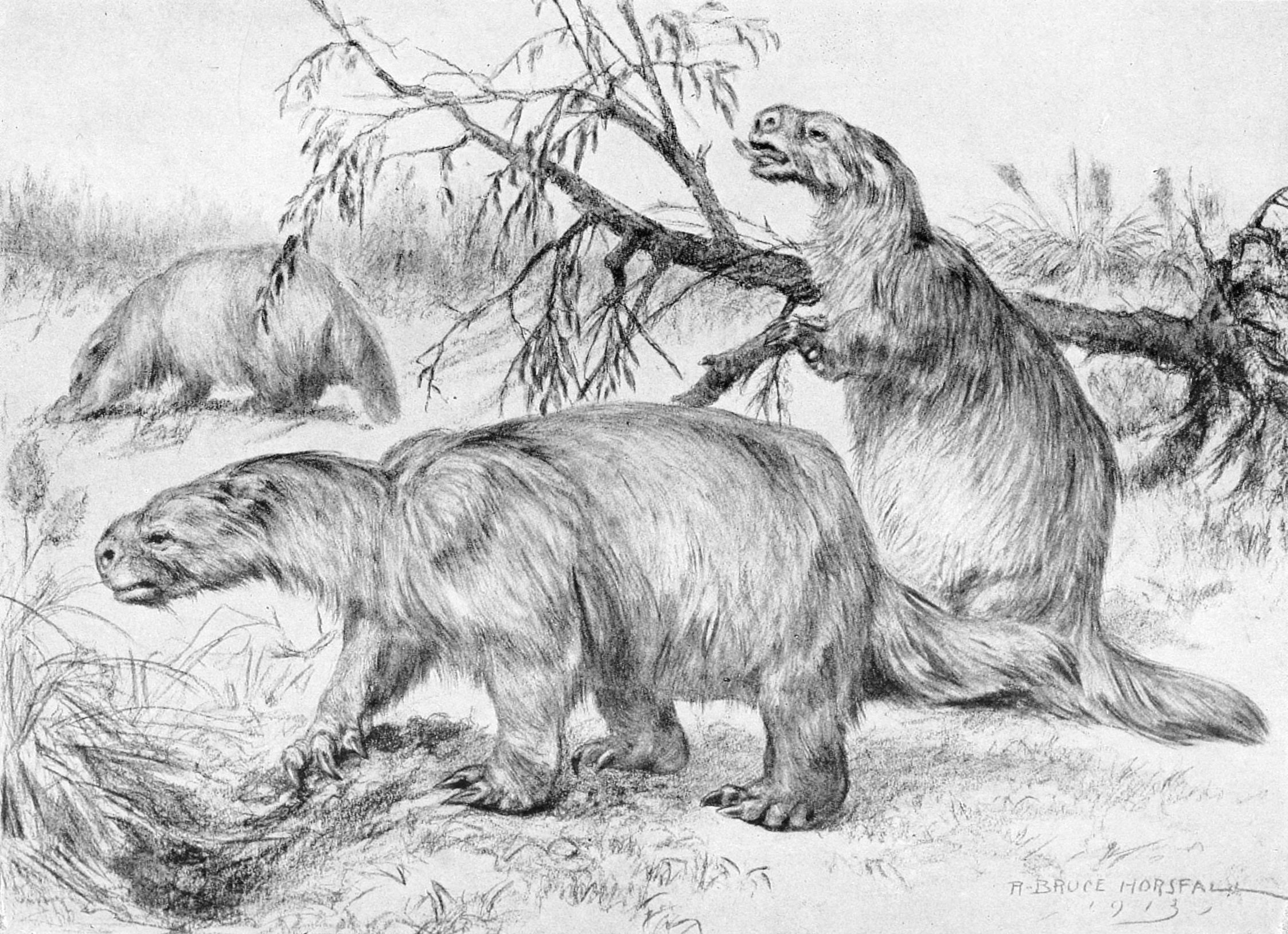
This piece first appeared in the Fredericksburg Standard in January 2026 and was a follow up to Mono Grande.
I received a lot of feedback concerning my take on Venezuela’s Bigfoot last week. So much in fact that I decided to share details of some of the other unknown species of South America’s northern most country.
Descriptions of the Mapinguari (above) vary but most describe it as more or less as an Amazonian Bigfoot (Yes, Venezuela has more than one Bigfoot.). It’s a giant bipedal but sometime quadrupedal humanoid animal with dark black fur, the face of an ape or monkey, and a roar like thunder. It reeks and is followed by clouds of insects. Famed ornithologist and cryptozoologist David Oren (1953-2023) led 10 expeditions in search of this elusive animal but never found more than footprints and claw marks. He also claimed to have heard the animal’s vocalizations. Some scientists and many cryptozoologists, including Oren, actually believe the animal to be a giant ground sloth that didn’t really go extinct about 8,000 years ago.
My Take: It’s a giant ground sloth.
Another Venezuelan Bigfoot is the vasitri. Prussian naturalist Baron Alexander von Humboldt wrote of the creature while mapping over 1,700 miles of the Orinoco River in 1825. "On the Orinoco, it is rumored the existence of a hairy man of the woods called Salvaje, that carries off women, constructs huts, and sometimes eats human flesh. The Tamanacs call im Achi, and the Maypures named him Vasitri or great devil; The natives and the missionaries have no doubt of the existence of this man-shaped monkey, of which they entertain a singular dread.” Sightings of the creature exist to this day but the general consensus is that many of these sightings were actually misidentification of a spectacled bear.
My Take: It’s a spectacled bear.
Meaning "tapir-eating tiger" in Spanish, the tigre dantero is said to be a feline about or slightly smaller than a jaguar. It has long teeth similar to the long extinct saber-toothed cats, a short tail, and can be brown or stripped like a tiger. The most recent sightings include that from Tirson Sosa who spotted one while hunting in 1991 and by a man named a man named David Angel in 2017. Both accounts were considered to be reliable.
My Take: It’s a jaguar.
First sighted in 1955 by famed explorer Alexander Laime, the pygmy plesiosaur is thought to be a smaller or mutated version of the plesiosaurs that lived some 203 million years ago. These Late Triassic – Late Cretaceous reptiles had a long flat body, a short tail, four flippers, and an extremely long, almost snakelike neck. Think the Loch Ness Moster. Laime wrote of his encounter, “They were sunbathing on a rocky ledge above the river. At first I thought they were seals, but when I sneaked closer, I saw they were creatures with enormously long necks and ageless reptilian faces. Each had four scale-covered fins instead of legs.” Biologists Fabian and Armando Michelangeli claimed to have seen the creatures in 1990. Most recent beliefs are that the creatures are long-necked, soft-shelled turtles or river otters.
My Take: They’re long-necked, soft-shelled turtles and they probably taste great when fried Cajun style.
The monkey-eating tree or monkey-trap tree, was first reported by Brazilian explorer Mariano da Silva who encountered one along the Guyanan-Brazilian border, near Venezuela in the early 1900s. The tree lures monkeys and other small animals close to it by secreting a sweet-smelling nectar at which point it engulfs them in its leaves and digests them. Think a giant Venus flytrap. Considering that Silva is one of the most decorated explorers of all time and was partners with Teddy Roosevlt on the Roosevelt-Rondon Scientific Expedition of 1914, I have no doubt this story is true.
My Take: It’s an actual carnivorous plant such as a pitcher plant or Venus flytrap and I really, really want to see one in action because I hate monkeys.
The giant caiman is just that, a giant caiman. Some sightings put this crocodilian at upwards of 40 feet in length. Reports of these animals are too many to mention but all state that it’s just a very, very large caiman.
My Take: It’s very, very large caiman. I regularly saw black caimans of 15 feet or more when I worked in Amazonia. I once saw one that was longer than the 17-foot-long boat I was traveling in. Black caimans of 21 feet in length have been captured.